
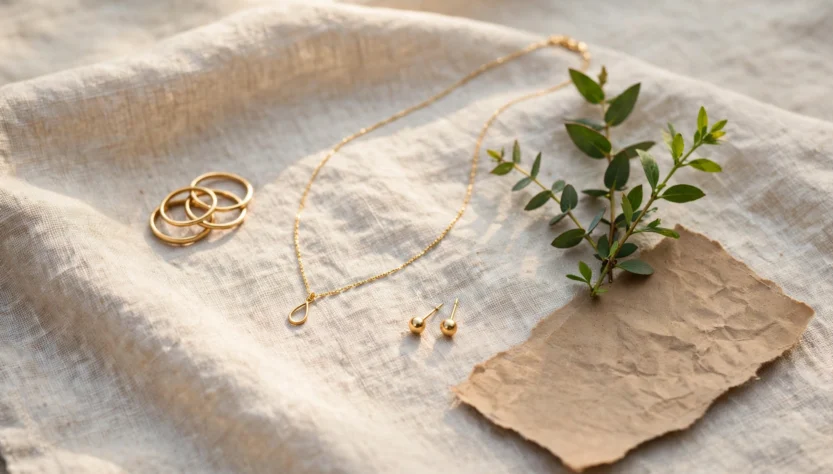
Ethical jewellery is jewellery made with care for the people who produce it and the planet it comes from. It uses materials that are mined, recycled or grown in a responsible way. It is made by workers who are paid fairly and work in safe conditions. It is sold with honest claims about where it came from and how it was made.
That short definition covers a lot of ground. A single ring can pass through miners, refiners, cutters, polishers, setters and retailers before it reaches you. Each step can be done well or badly. Ethical jewellery is the attempt to get each step right, and to prove it with clear evidence rather than kind words. This guide covers the materials, the people and the planet behind a piece, and how to check a claim before you believe it.
What Makes Jewellery Ethical?
No single rule decides whether a piece of jewellery is ethical. The word covers several separate concerns, and a piece can do well on one and badly on another. A ring made from recycled gold can still be set with a stone from an unknown source. That is why honest sellers talk about specific choices rather than a single ethical label. They tell you where the metal came from, how the stones were sourced, and who made the piece. Vague words such as natural, conscious or eco friendly tell you very little on their own.
The most useful way to judge a piece is to ask three questions. Where did the materials come from? Who made it, and how were they treated? What happens to it at the end of its life? A seller who can answer all three with specifics is worth your trust.
The Three Pillars of Ethical Jewellery
Ethical jewellery rests on three pillars, and together they give a fair picture of how a piece was made.
Responsible Sourcing
Responsible sourcing means knowing where materials come from and choosing sources that cause less harm. For gold, that can mean recycled gold, Fairtrade certified gold or gold from a mine that meets recognised standards. For diamonds, it can mean a stone with a Kimberley Process certificate, a lab grown stone or a second hand stone. Traceability is the key idea: a seller who knows their direct suppliers and can name them is already ahead of one who buys blind from a wholesale market. Second hand jewellery is also part of responsible sourcing, because a pre owned piece creates no new demand for mining. Our guide to buying second hand jewellery safely explains how to check a piece before you buy it.
Fair Treatment of Workers
Jewellery making involves skilled hand work, often in small workshops. Cutting, polishing, setting and engraving are done by people. Fair treatment means safe working conditions, fair pay, no child labour, reasonable hours and proper handling of the chemicals used in plating, polishing and cleaning.
This pillar is the hardest for a shopper to check. You cannot see a workshop from a product page. The best evidence is a recognised certification, a published supplier list or a maker who talks openly about their workshop. Price is also a clue, though not proof: a piece that sells for less than the cost of its materials and a fair wage raises a question, because someone in the chain is paying the difference.
Care for the Environment
Mining changes landscapes, uses large amounts of water and energy, and can pollute soil and rivers. Refining and plating use chemicals, and packaging adds waste. An ethical maker tries to reduce each of these harms. Recycled metals are the clearest environmental win, because refining existing gold uses far less energy than mining new gold. Durable design is another win: a piece that lasts for years replaces many short lived pieces. Packaging matters too, but it is a small part of a piece’s footprint, so a seller who talks only about the box while saying nothing about the metal is missing the point.
Ethical, Sustainable and Fairtrade Jewellery: What Is the Difference?
These three words are often used as if they mean the same thing. They do not. Knowing the difference helps you read product pages with a sharper eye.
| Term | What it means | What to look for |
|---|---|---|
| Ethical jewellery | Jewellery made with care for people and the planet across the whole supply chain | Named suppliers, honest sourcing claims, fair labour evidence |
| Sustainable jewellery | Jewellery made in a way that can continue without depleting resources or damaging the environment | Recycled metals, durable design, low waste packaging, repair services |
| Fairtrade jewellery | Jewellery made with Fairtrade certified gold, which guarantees a minimum price and a premium for mining communities | The Fairtrade Mark and a licence number on the product page |
| Recycled jewellery | Jewellery made from metal refined from old jewellery, electronics or industrial scrap | A clear statement of the recycled content and the refiner used |
| Vegan jewellery | Jewellery made without animal products such as leather, pearl, silk or shell | A materials list with no animal derived parts |
Fairtrade is the most specific of these terms, because it is a certification with rules and audits. Ethical and sustainable are broader words with no single legal definition, and any seller can use them. That is why the evidence behind the word matters more than the word itself. Our guide to what fashion jewellery is made of explains the common materials used in affordable pieces, from plated base metals to stainless steel and cubic zirconia. Knowing the materials makes it easier to judge a sustainability claim.
Recycled Gold vs New Gold
Recycled gold is one of the most talked about choices in ethical jewellery. The idea is simple: gold that already exists is refined and used again, instead of digging new gold out of the ground. But the details matter, and some claims are stronger than others.
How Recycled Gold Is Made
Recycled gold starts as old jewellery, dental gold, industrial scrap or electronic waste. A refiner melts it down, removes impurities and produces pure gold bars, which are then alloyed into the carat gold used for rings, necklaces and earrings. Gold can be recycled again and again without losing its properties, so a ring made from recycled gold is no weaker or duller than one made from new gold. The hallmark and the colour are the same. The only difference is the history of the metal.
What Recycled Gold Claims Really Mean
A claim of 100 percent recycled gold means all the gold in the piece came from recycled sources. A claim of recycled gold with no percentage tells you less. The piece may contain a small share of recycled metal mixed with new metal. Ask for the percentage if it is not stated.
There is also a limit to what recycled gold can prove. Refining mixes gold from many sources, so the original mine cannot be traced. Recycled gold avoids new mining, which is a real benefit, but it says nothing about working conditions in the refinery or the workshop. It is one good choice, not a complete ethical guarantee.
Does Recycled Gold Cost More?
Recycled gold is usually similar in cost to new gold, because the gold price is set by the market, not by the metal’s history. A maker may charge a small premium for certified recycled gold, because sourcing it deliberately takes extra care. But a large premium should raise a question. Ask what the extra money pays for. For fashion jewellery, recycled gold is less common than in fine jewellery. Most fashion pieces use gold plating over a base metal, not solid gold. If a fashion piece claims recycled gold, check whether the claim covers the plating, the base metal or the whole piece.
Which Should You Choose?
Choose recycled gold when you want to avoid new mining and the seller can show a clear sourcing policy. Choose new gold when it comes from a certified source, such as Fairtrade gold, and you value traceability back to a specific mining community. Both can be good choices. The weakest choice is gold of unknown origin sold with a vague ethical claim. If a seller cannot say where their gold comes from, the recycled label is doing the work of a real answer.
Lab Grown Diamonds and Ethical Jewellery
Lab grown diamonds are real diamonds, made in a laboratory instead of mined from the earth. They have the same chemical composition and the same hardness as mined diamonds. They are often chosen by buyers who want to avoid the environmental and human costs of diamond mining. Growing a diamond still uses energy, and the source of that energy matters, so ask the seller about it if that matters to you. Lab grown diamonds also cost less than mined diamonds of the same size and quality. That lower cost is a practical benefit, but it is not an ethical claim on its own. A cheap lab grown stone set in a poorly made ring by an underpaid worker is not an ethical piece.
Our comparison of lab grown diamonds vs natural diamonds in the UK covers certification and resale value.
How to Spot Greenwashing in Jewellery
Greenwashing is the practice of making a product sound more ethical or sustainable than it really is. Jewellery is a common place for it, because the supply chain is long and hard to check.
Vague words with no detail are the first sign. A product page that says eco friendly, conscious or green without saying what that means is making a claim you cannot test. Look for specifics: a named material, a percentage, a certification or a supplier name. A single good feature used to describe the whole piece is the second sign. A seller may highlight recycled packaging while saying nothing about the metal or the stones. Packaging is worth improving, but it does not make the jewellery ethical.
Images of nature with no facts are the third sign. A photo of leaves or a forest does not change where the gold came from. Trust words and evidence, not the background of a photograph. Missing information is the fourth sign. If a seller talks at length about design and style but never mentions sourcing, labour or materials, that silence is informative.
The simplest test is to ask one direct question: where does the gold in this piece come from? A good seller will answer with specifics.
Certifications and Labels Worth Looking For
Certifications are useful because they are checked by an independent body, not by the seller. No certification covers everything, but each one answers a specific question.
Fairtrade Gold
Fairtrade Gold is gold mined by small scale miners who meet Fairtrade standards. The standard guarantees a minimum price for the miners and a Fairtrade Premium, which is extra money paid to the mining community for local projects. Look for the Fairtrade Mark and a licence number.
Fairmined Gold
Fairmined is a certification for gold from artisanal and small scale mines that meet standards for working conditions, environmental care and community development. It is run by the Alliance for Responsible Mining. Like Fairtrade, it gives small mining communities a better price and a premium for local investment.
Responsible Jewellery Council
The Responsible Jewellery Council, known as the RJC, sets standards for the jewellery supply chain covering human rights, labour, health and safety, and environmental practice. Membership means a company has been audited against those standards. It is a company level certification, not a guarantee about a single piece.
Kimberley Process
The Kimberley Process is an international scheme that aims to stop conflict diamonds from entering the diamond trade. A Kimberley Process certificate says a shipment of rough diamonds is conflict free. It is a useful baseline, but it covers only rough diamonds, not cut stones, and it defines conflict narrowly. It is a starting point, not a full ethical guarantee.
Other labels you may see include recycled content claims verified by a refiner, and the UK hallmark. A hallmark is not an ethical label, but it tells you the metal content of a piece. Our guide to UK jewellery hallmarks explains how to read the marks stamped on a piece.
How to Buy Ethical Jewellery in the UK
Buying ethical jewellery does not need to be complicated. A short checklist will catch most of the problems.
- Read the materials list before you buy. Look for the metal, the carat, the stones and the plating.
- Ask where the gold came from. Recycled, Fairtrade, Fairmined or a named mine are all clear answers. Unknown is not.
- Ask about the stones. Look for a Kimberley Process certificate, a lab grown certificate or a second hand origin.
- Check for a real certification, not just a kind word. Look for the Fairtrade Mark, Fairmined or RJC membership.
- Buy from a maker or retailer who names their suppliers. A supplier list or a workshop story is a good sign.
- Choose durable pieces. A well made piece that lasts for years is more sustainable than three cheap pieces that break.
- Consider second hand first. A pre owned piece needs no new mining and often costs less.
- Ask about repairs. A seller who offers repairs stands behind their work and helps a piece last longer.
Start with one change rather than trying to fix everything at once. Choosing recycled gold, buying second hand or asking one direct question is a real step.
Caring for Ethical Jewellery
Looking after a piece is part of making it ethical. A piece that lasts for years does not need to be replaced, which saves materials, energy and money. Store pieces separately so they do not scratch each other. Keep them away from perfume, hairspray and household chemicals, which can damage plating and dull stones. Check clasps and settings now and then. Repair is better than replacement: a broken clasp, a worn prong or a loose stone can usually be fixed, and many small repairs cost little and add years to a piece’s life.
Frequently Asked Questions
What is ethical jewellery?
Ethical jewellery is jewellery made with care for the people who produce it and the planet it comes from. It uses responsibly sourced materials, fair working conditions and honest claims about where it came from and how it was made.
Is recycled gold really ethical?
Recycled gold is a good choice because it avoids new mining and can be refined again and again without losing quality. It is not a complete guarantee on its own. The refinery, the workshop and the stones still matter, so look for a clear sourcing policy.
Are lab grown diamonds ethical?
Lab grown diamonds avoid the land disturbance and mining risks of natural diamonds, and they are real diamonds with the same hardness and composition. Growing them still uses energy, so the energy source matters. They are a strong ethical choice when the setting and the maker are also responsibly chosen.
How can I tell if a jewellery brand is greenwashing?
Look for specifics. A brand that names its materials, gives percentages, shows certifications or lists suppliers is giving you something to check. A brand that uses vague words such as eco friendly or conscious with no detail, or talks only about packaging, is likely greenwashing.
Is Fairtrade gold worth choosing?
Fairtrade gold guarantees small scale miners a minimum price and a premium for their community. It is one of the clearest ethical choices you can make, because the standard is audited and the Fairtrade Mark is easy to verify.
Is second hand jewellery the most ethical option?
Second hand jewellery is often the most ethical choice, because it needs no new mining, refining or manufacturing. It also costs less than a new piece of the same quality. Check condition and authenticity, including hallmarks, stones and clasps, before you buy.
Final Thoughts
Ethical jewellery is not about buying the perfect piece. It is about asking better questions and choosing sellers who answer them honestly. Recycled gold, Fairtrade gold, lab grown diamonds and second hand pieces are all real options, and none of them is perfect on its own. What matters is the whole picture: where the materials came from, who made the piece and how long it will last. Buy fewer pieces, choose well made ones and look after them.